Join us the 2nd Thursday of each month for our virtual support group meeting. Email us for the Zoom link at southwestga@sistersnetworkinc.org
When you feel overwhelmed

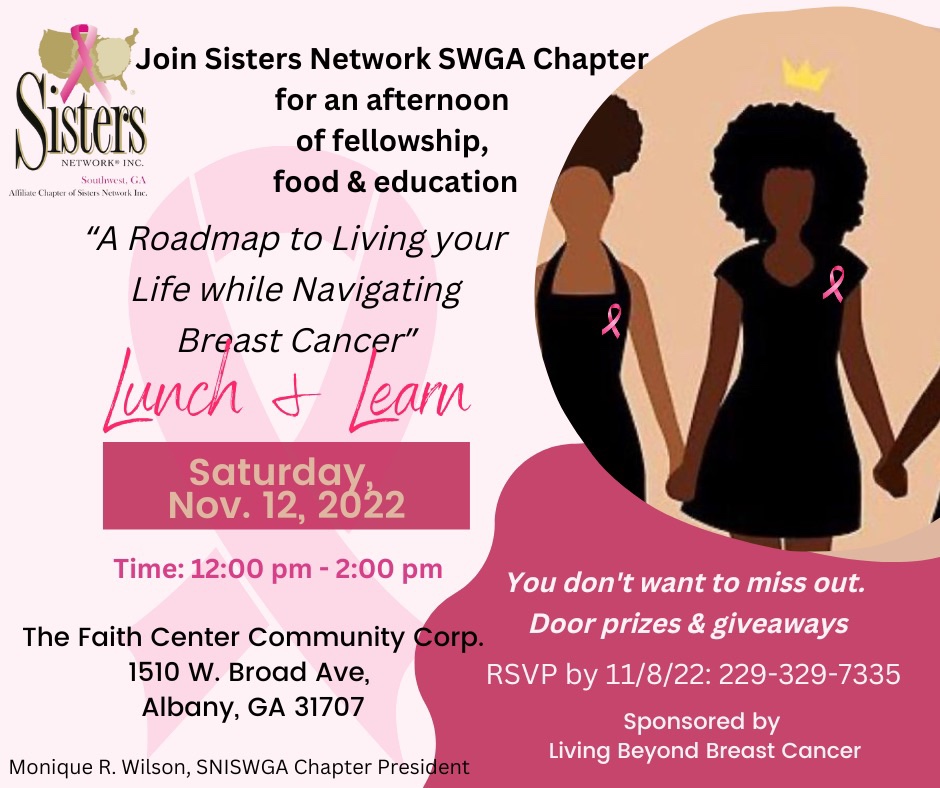
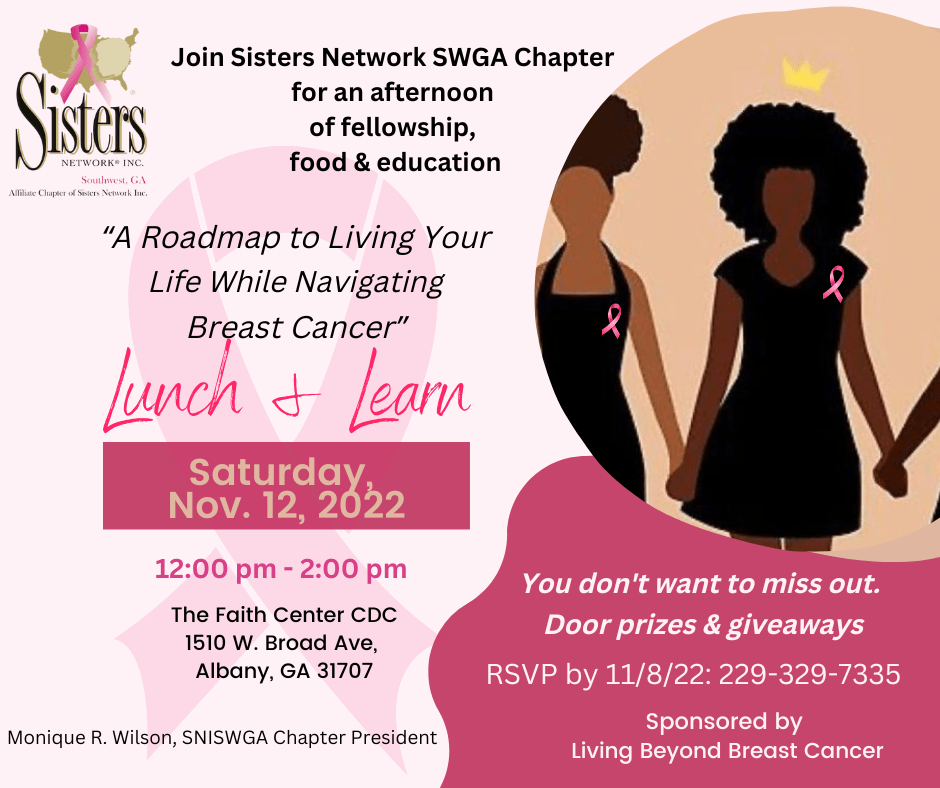
Lunch & Learn event
Chapter President Monique Wilson shares her story
Join us November 12, 2022
Meet SNISWGA Chapter Vice President
Proverbs 3: 5-6 “Trust in the Lord with all your heart and lean not to your own understanding. In all your ways acknowledge him and he SHALL direct your path.” Let the word do the work!
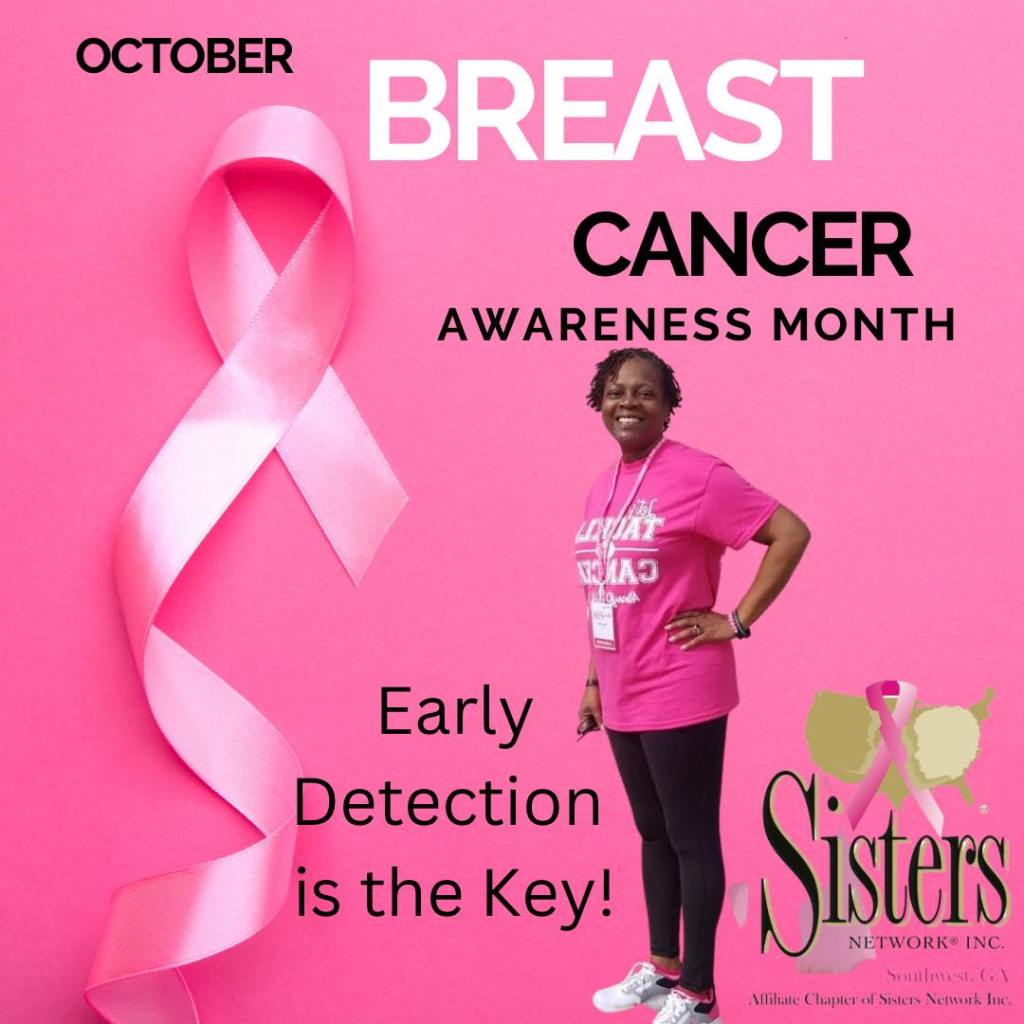
***EARLY Detection is the KEY*** 
Breast Cancer – No Respecter of Gender
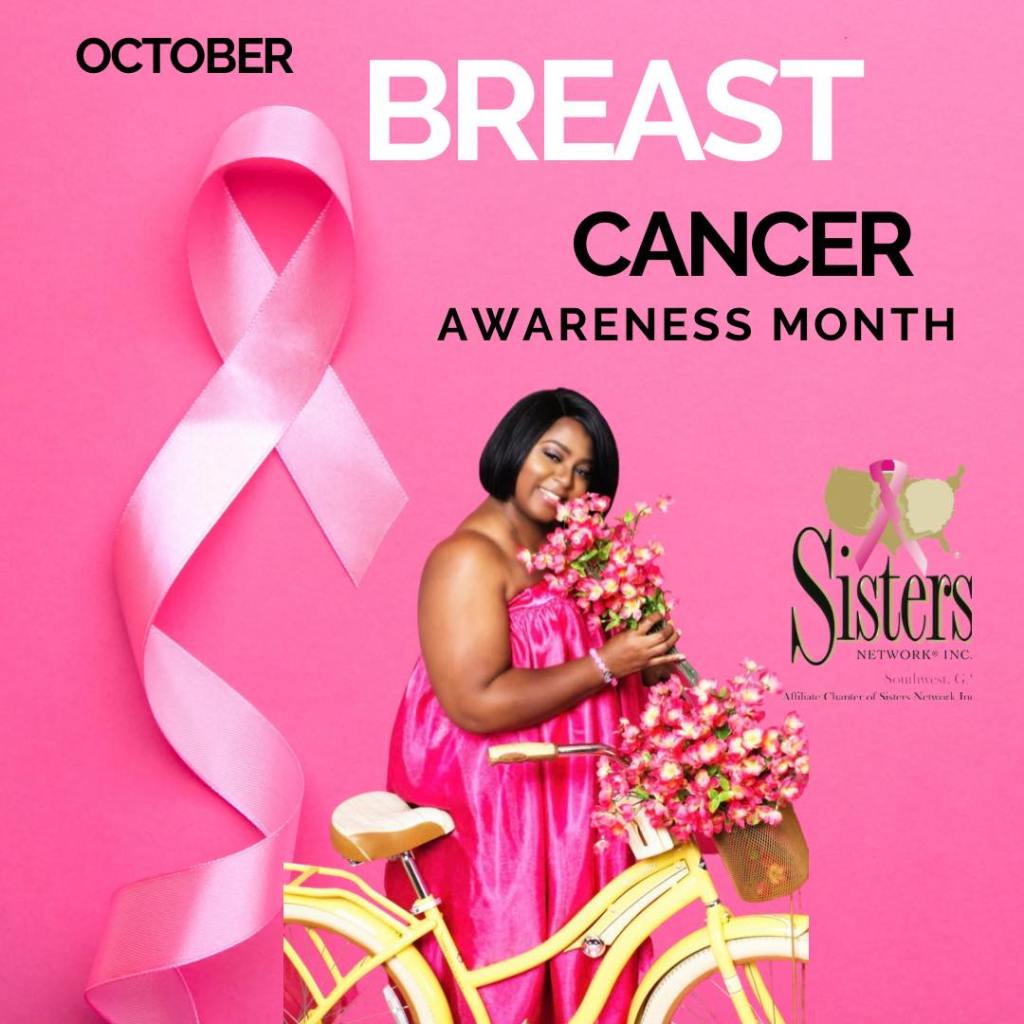
When we think about breast cancer generally women come to mind, but men get breast cancer too. Male breast cancer is most common between the ages of 60 and 70, while most female breast cancers are found in women who are 50 or older. Breast cancer is no respecter of gender! The more we understand it, the better equipped we become to deal with it. Getting a breast cancer diagnosis can be overwhelming. Emotions can run the gamut from fear, anxiety, depression, anger, denial, why me, loss of hope, and so much more. During Breast Cancer Awareness Month in October people generally wear pink ribbons in remembrance of those lost to the disease, in support of the progress being made to eradicate the disease, and to honor breast cancer survivors to help keep hope alive. When hope is lost there is nothing much left. So it becomes important to educate yourself about this dreaded disease because that knowledge could help save a life. This month, as activities, are happening across the U.S. to raise money to fund breast cancer patient support, research, and education, let’s examine a few educational facts about breast cancer.
According to the National Breast Cancer Foundation and the American Cancer Society:
- Breast cancer is the most common cancer for women worldwide
- On average, every two minutes, 1 in 8 females is diagnosed with breast cancer
- 1 woman will die of breast cancer every thirteen minutes
- An estimated 2,470 men will be diagnosed with breast cancer – that’s 1 in 1000
- Alcohol use increases the risk of breast cancer
- Breast cancer occurrence and death rates generally increase with age
- Only 5-10% of individuals diagnosed have a family history of breast cancer
- Over 3.3 million breast cancer survivors are alive in the U.S. today
Breast cancer is the second leading cause of cancer death in women according to the American Cancer Society. But not everyone diagnosed with breast cancer has symptoms. Different people exhibit different symptoms and breast cancer symptoms can be the same for conditions that are not cancer-related. Please review the following chart for the most common breast cancer symptoms for men and women.
Early detection of breast cancer can save lives, and being proactive is crucial for early detection. Both men and women should do monthly breast self-exams to understand the normal look and feel of their breasts. Any abnormal changes you notice, such as lumps, irregular thickening of tissue, changes in size or shape, and fluid leaking from the nipples should be reported to your healthcare provider.
Health Alert For Men:
According to the Illinois Department of Public Health, the best time to perform a male breast self-exam is during or right after a warm shower or bath.
To perform a male breast self-exam:
Check each breast one at a time.
Use your right-hand fingers to check your left breast and your left-hand fingers to check your right breast.
With your fingers flat against the breast, press firmly in small, clockwise circles.
Start at the outermost top edge of your breast and spiral towards the nipple.
Feel for hard lumps or bumps in your breast. Be certain to cover all parts of your breast.
Gently squeeze both nipples and look for any discharge.
Look carefully for changes in the size, shape, and contour of each breast, e.g., puckering, dimpling, or changes in skin texture.
Reminder For Women:
According to medlineplus.gov the best time to perform a female breast self-exam is about 3 to 5 days after your period starts. Whether you have a period or not, do the exam on the same day every month.
To perform a female breast self-exam:
Lying on your back, place your right hand behind your head. With the middle fingers of your left hand, gently yet firmly press down using small motions to examine the entire right breast.
Next, sit or stand. Feel your armpit, because breast tissue goes into that area.
Gently squeeze the nipple, checking for discharge. Repeat the process on the left breast.
Make sure that you are covering all of the breast tissue.
Standing in front of a mirror with your arms by your side, look at your breasts directly in the mirror. Look for changes in skin texture, such as dimpling, puckering, indentations, or skin that looks like an orange peel.
Also, note the shape and outline of each breast.
Check to see if the nipple turns inward.
Repeat with your arms raised above your head.
NOTE: Breast self-examination is a guide to help you note any changes in your breasts. It does not replace comprehensive medical examinations and screenings by a healthcare professional.
There is no “natural” cure for breast cancer. Medical treatments are necessary to shrink, slow the growth, or remove tumors. But regardless of your risk factors for breast cancer, everyone can lower their risks by keeping a healthy weight and being physically active. Having a candid conversation with your healthcare provider about your risk factors for breast cancer is a start to proactively protecting your health. Your health is your wealth, and you can decide today to do all that you can to protect it.◼

Meet our member chair Tracey Clark.
I’m Tracey, a 2x breast cancer survivor! The Bible says God will put no more on us than we can bare! But just know “By His Stripes We Are Healed!”
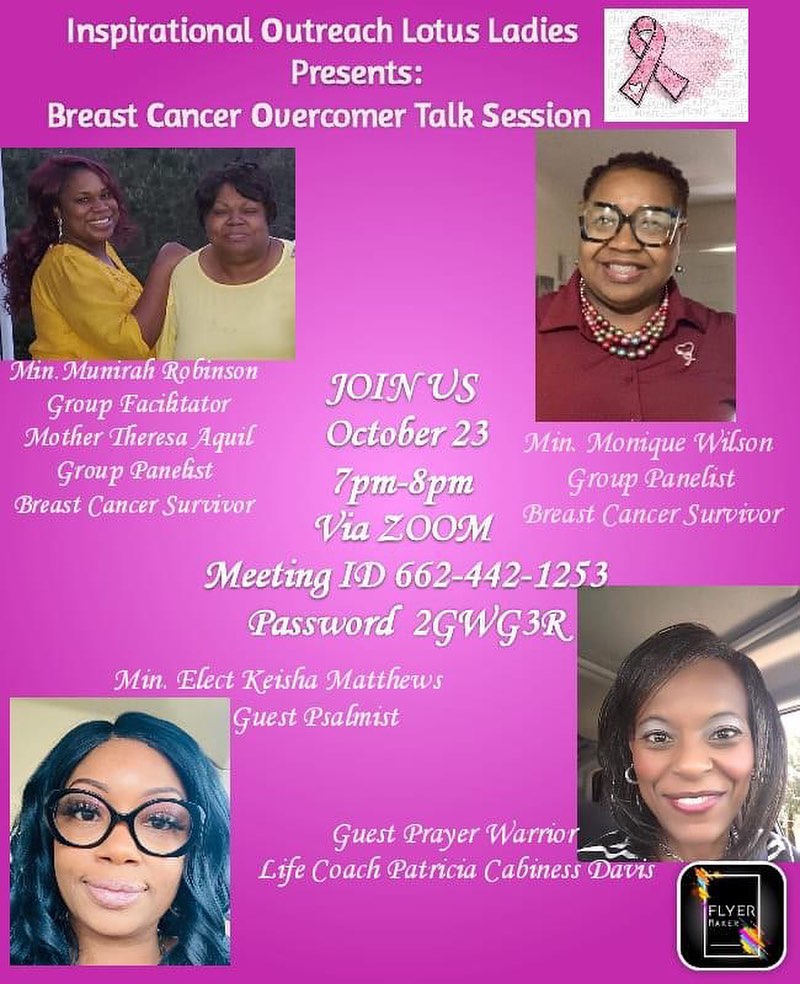
This Experience Will Take Place on ZOOM ONLY !!!
What is Breast Cancer?
Breast cancer is the most common type of cancer among women in the United States. About 1 in 8 women are diagnosed with breast cancer each year. Early detection is very important in the treatment of breast cancer. There are steps women can take to reduce the chances of developing breast cancer or find it early, when its is most treatable.
How to lower the risk!
Get screened for breast cancer. By getting regular exams, your are more likely to find breast cancer early when its most treatable.
Control your weight and exercise. Maintaining a healthy diet with fruits and veggies is one of the greatest benefits in lowering many health issues. Exercise for a least 30 minutes a day.
Know your family history. If you have a family history of breast cancer, talk to your primary physician about your chances of being diagnosed and how you can lower the risk.
Limit your alcohol intake. Statistics shows, women who have 2-5 alcoholic beverages per day have a slightly higher chance of breast cancer.
 Sisters Network Southwest GA Chapter