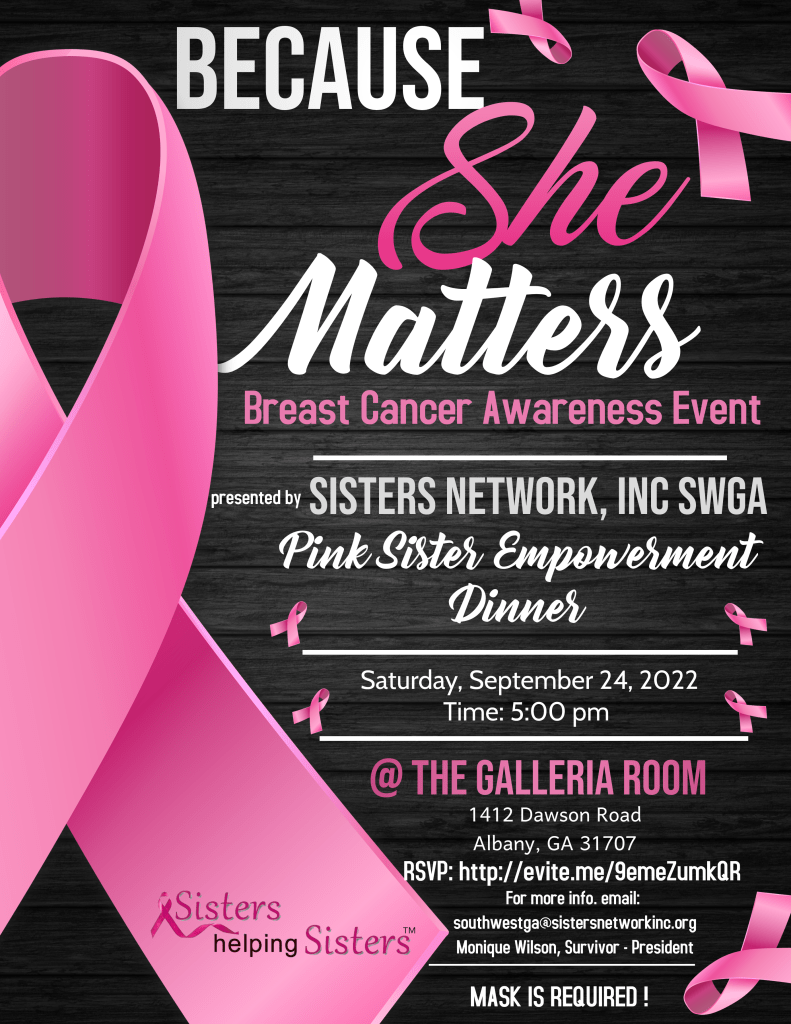
Join us for our first event sponsored by Sisters Helping Sisters. An evening of Empowerment, Education and Early Detection To RSVP: http://evite.me/9emeZumkQR

Sisters Network Southwest GA is a local affiliate of Sisters Network® Inc., which is a national African American breast cancer survivorship organization. Our motto is "Stop the Silence." To request information or provide support, email or call us at southwestga@sistersnetworkinc.org or 229-329-7335.
Join us for our first event sponsored by Sisters Helping Sisters. An evening of Empowerment, Education and Early Detection To RSVP: http://evite.me/9emeZumkQR
So your breast cancer treatment is over. The many physician’s appointments has now slowed down. No more back and forth or back to back appointments and screenings. Now what; what happens next? Some people return to their pre-cancer lives, while others are tremendously changed by their journey.
The challenge for me way how to return back to my normal everyday life while adjusting to everything that has occurred. My hope, is that this blog will help you and motivate you to keep pushing even when life happens. I challenge you to push yourself even when you do not feel like it. May this message help you on your breast cancer survivor journey.
Many survivors view Survivorship in a different way. However, it’s it’s often defined as the process of living with, through, and beyond cancer. While some people continues to receive treatments for a long time to reduce the risk of recurrence or to manage the cancer, others experience a mixture of strong feelings, such as joy, concerns, relief, guilt and even fear. Some say they appreciate life more after a cancer diagnosis and have gained a greater acceptance of themselves. While others become anxious about their health and are uncertain about coping with everyday life. There are those who prefer to put the experience behind them and feel that their lives have not changed in a major way.
My definition of survivorship is being cancer-free and thriving in life. Become patient with myself and taking every step to be more proactive while attaining a ne perspective on my health and wellbeing.
Having a fear of recurrence is only natural if you ask me. After being diagnosed, how can you not feel scared that cancer might come back? The critical thing to do is not let it stop you from living a life you love. Don’t let your fear stop you from thriving, achieving your goals in life or stopping your purpose for which you are here on earth. Trust me, it’s only natural and forever in the back of our head; this is one reason why we as survivors must not miss our doctor’s appointment after treatments are completed. Follow-ups are very crucial so continue to follow-up and stay on course with your oncology team.

After treatment, a person may feel both optimistic and scared. They will appreciate life more but can be afraid. Especially, when they have to manage their health by themselves now that the frequent doctor’s visits are over.
Being scared that cancer might return is very real and entirely normal. Thoughts like have my cancer returned often pop into your head quickly since they’re so easily triggered by something as simple as an ache or pain.
Additionally, it may come up before follow-up appointments and tests or even on your diagnosis anniversary. It’s all-natural; however, don’t let these feelings take control. You cannot directly control whether cancer returns, but you can control how much the fear of recurrence affects your life. Don’t live in fear of recurrence.
Develop a positive mindset and focus on your ability to move forward with your life. For me, that was going back to work part-time. This made me feel like my old self again and gave me something to keep my mind and thoughts occupied. Finding things to keep you busy is key to coping with the fear of recurrence. You have to decide what that means for you.
Fear of recurrence is a common phenomenon for survivors. You may experience these emotions from time to time, but they should not be constant in your life. It’s normal if you feel most anxious about cancer coming back during the first year after treatment; however, it usually gets better over time with some help! Here are a few ideas that might work well for you:
Talk to your healthcare team about the possibility of recurrence. The doctors will give you accurate information about how likely it is that a repeat will happen and what signs you need to watch for if one does occur. Unfortunately, no one can predict whether or not new cancer may form. But having some knowledge on this subject might help ease any worries you have in anticipation of an event like this occurring again.
When you face feelings of fear, it is essential to open up about your feelings and thoughts. Doing so allows for a more productive discussion between yourself and others who care about you, such as friends or family members. It can also be beneficial to take some time by yourself to explore the roots of these emotions privately through journaling. You can also talk with someone else who understands what it feels like when confronted by this emotion.
Take Care of Yourself
Exercise more, eat healthier meals, and get proper sleep. These habits will make you feel better as they can help improve your health both physically and emotionally!
Finding ways to manage your stress will help you cope. Try different ways of reducing stress to find out what works best for you. For me, it’s doing activities I enjoy like taking a walk in the park, indoor and outdoor cycling, mindfulness app, adult coloring and just a self care pampering.

Surviving breast cancer is a long terrifying journey. You deserve to know what the next step in your life will be like after you complete treatment. The end of one thing means something new can start, and it’s okay if that scares you at first. If this post was helpful, please share with friends who are going through their own breast cancer survivorship journey.
Monique R. Wilson, Survivor ~ President of Sisters Network, Inc Chapter of SWGA
In addition to providing relief from pain, tears also contain plenty of mood-regulating chemicals known as endorphins. In fact, scientists have found out that there is an increase in these powerful substances after someone cries. This could help people who suffer from depression or other similar conditions by regulating their emotions and feelings while reducing anxiety.
2. Write Things Down
Writing is a great way to take care of your mental health, especially when feeling overwhelmed by life. Whether you are doing creative writing or writing about what’s happening in your life, putting words on paper can help reduce stress and make you feel less overwhelmed.
Talking to another person can help you process your overwhelming feelings. Trusted friends and relatives may offer a perspective you haven’t considered. Even when they don’t offer advice, having a compassionate listening ear can go a long way in reducing overwhelming feelings.
Sometimes, talking to someone is a healthy distraction from whatever is going on in your life. Laughing with a friend is a fun and healthy way to reduce your stress levels. Even if nothing is “solved” during your conversation, the break from your stress can help you deal with feeling overwhelmed.
Certain scents are known to reduce stress levels. If you’re experiencing regular stress that leaves you overwhelmed, invest in candles or oil diffusers for aromatherapy. Some fragrances can reduce the amount of cortisol created by your body. Reducing this stress hormone can reduce your sense of being overwhelmed.
Lavender, rosemary, jasmine, vanilla, and cinnamon are just a few of the scents that can reduce your stress levels. If you have a favorite smell like fresh-cut grass or bread baking. You can find a way to enjoy these scents, which can help reduce your stress levels, even if they aren’t traditional stress-reducing scents.
When we’re faced with a seemingly impossible challenge, it’s easy to get lost in the dark thoughts about how bad things might be. But sometimes, all that happens is just our brain imagining what could go wrong. Then extrapolating those possibilities out until they seem an inevitability. Which can feel overwhelming no matter if they’re actually going to happen or not! Instead, you need some perspective on your situation to not lose hope when life gets hard.
Often, figuring out why these pessimistic/overwhelming feelings are coming up for us at this moment will help bring them back into balance.
Even in overwhelming situations, there is room to practice gratitude. Perhaps the nurse at the hospital was exceptionally kind to you. Or maybe you saw a beautiful bird out your window this morning. No matter what you’re thankful for, take time to reflect on the good things that have come your way.
Make time to express your gratitude to those around you. If you have relatives or friends who have helped you, make sure to let them know you appreciate everything they’re doing. Sharing your gratitude lets them know that their efforts are seen and appreciated.
Taking long deep breaths helps you fight overwhelming feelings. When your heart is racing because of stress, focusing on your breathing can help you combat the physical symptoms of anxiety and feeling overwhelmed.
If you’re unfamiliar with breathing exercises, you can download apps on your phone to help you. Calm and Headspace are best known for their guided breathing exercises. Additionally, apps like Liberate, MyLife, and Simply Being can also help you focus on your breathing during times of stress.
Naps aren’t just for kids! Taking a nap is an excellent way to give your body the physical rejuvenation it needs. If your physical exhaustion is lending to your stress, taking a nap is an essential step to getting back on track.
One of the best ways to get better from illness is through rest. Most people recommend only taking short naps, but if you’ve been feeling under the weather for a while, it’s time to make an exception! Longer intervals can help your body heal and prepare for what lies ahead.
Give yourself the gift of some time to get lost in a book, movie, or a good television show. This way, you can take your mind off things and then come back stronger than ever when dealing with them later on down the line!
One of the best ways to deal with stress and overwhelming emotions is by exercising or just move your body. When you exercise, your endorphin levels increase, which can reduce some anxiety and make you feel happier.
If your physical limitations prevent you from getting strenuous exercise, go for a brisk walk, or walk around your home. Even simple stretches and a short walk can work for your emotional benefit.
My Conclusion is this:
Sometimes, when you are feeling overwhelmed by life’s demands and responsibilities, it can seem like there’s just no way to get anything done. The feeling of being swamped often leads us into a downward spiral curb; where we feel even more frustrated and discouraged. But the truth is that most people experience this at some point or another in their lives-which means you are not alone!
IN UNITY THERE IS STRENGTH – IN STRENGTH THERE IS POWER – IN POWER THERE IS CHANGE.
In the U.S. breast Cancer is the second common cause of cancer death in African American
women.
African American women have a 40% higher death rate than white women in the U.S.
African American women are more likely to be diagnosed with breast cancer before age 40 than
white women in U.S.
There is evidence that aggressive tumor characteristics are more common in young African
American women than white women.
**Source: American Cancer Society, Cancer Facts and Figures of African Americans 2018-2019
Being diagnosed with breast cancer can be a life changing experience for many women and their families. Sisters Network SWGA wants to remind every women going through this journey, “YOU ARE NOT ALONE”
 Sisters Network Southwest GA Chapter